Top Benefits of Renewable Power for a Sustainable Future?
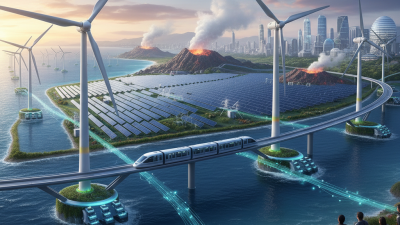
In recent years, renewable power has gained traction as a viable solution to energy challenges. This shift is not just beneficial; it is essential for a sustainable future. Solar, wind, and hydropower resources are becoming more accessible, reducing our reliance on fossil fuels. Such a change also helps mitigate climate change and protects ecosystems.
Moreover, implementing renewable power can lead to job creation. Many communities are seeing growth in green technology industries. However, this transition is not without obstacles. Initial costs and infrastructure challenges remain significant hurdles that need careful consideration. Even so, the long-term benefits for both society and the environment are immense.
Investing in renewable energy opens up new avenues for innovation. The potential for storage technologies and smart grids is enormous. As we look ahead, embracing renewable power will play a pivotal role in shaping a resilient and sustainable world. Yet, we must reflect on our commitment and readiness to adapt.
Advantages of Renewable Energy Sources in Reducing Carbon Emissions
Renewable energy sources play a critical role in reducing carbon emissions. According to the International Energy Agency (IEA), the use of renewable energy could cut global carbon dioxide emissions by around 70% by 2050. Solar, wind, and hydroelectric energy are leading this charge. These energy sources are essential for achieving our climate goals.
Transitioning to renewable energy can significantly lower air pollution. A report from the World Health Organization states that poor air quality causes seven million premature deaths annually. By using cleaner energy, we can enhance public health and create sustainable environments. However, the transition isn't wholly without challenges. Infrastructure for renewable energy can lag, making adoption uneven across regions.
Moreover, while many countries embrace renewables, there are gaps in energy storage and distribution. A study by the National Renewable Energy Laboratory highlights that energy storage solutions are still developing. As we focus on expanding renewable energy, we must address these imperfections. This reflection is vital in ensuring that clean energy benefits everyone and truly contributes to lowering carbon footprints.
Economic Impact: Job Creation in the Renewable Energy Sector
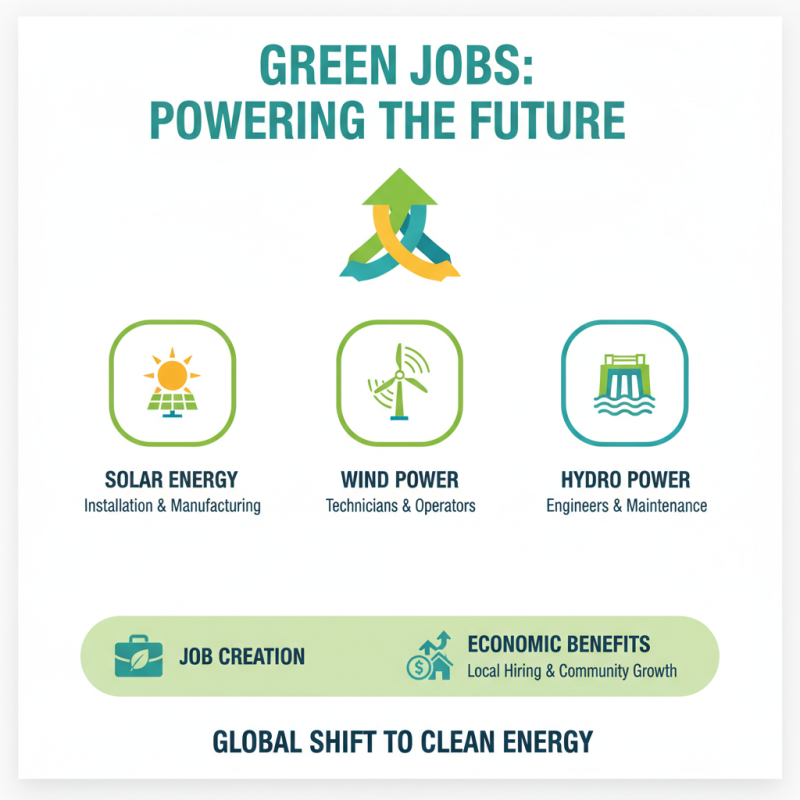
The renewable energy sector is experiencing significant growth, leading to job creation. As the world shifts away from fossil fuels, new employment opportunities arise. Solar, wind, and hydroelectric projects are on the rise, providing a range of roles from installation to maintenance. Communities benefit from local hiring practices and economic stimulation.
Tips: When considering a career in renewables, focus on developing specific skills. Certifications in solar panel installation or wind turbine maintenance can enhance job prospects. Networking with professionals in the field can be beneficial.
However, this rapid growth presents challenges. Not all regions are equipped for the shift. Some areas may struggle with outdated infrastructure. Training programs must adapt to meet new demands. It’s essential to ensure that education aligns with industry needs.
Investing in green technologies can create immense value. Beyond jobs, renewables contribute to energy independence. Localizing energy production can reduce costs. Encouraging businesses to adopt sustainable practices supports further job creation.
Cost Competitiveness: Renewable Power vs. Fossil Fuels over the Last Decade
The cost dynamics between renewable power and fossil fuels have shifted significantly over the last decade. According to the International Renewable Energy Agency (IRENA), the cost of solar photovoltaic (PV) systems fell around 82% between 2010 and 2019. Wind energy costs also dropped by approximately 49% in the same period. As a result, renewables are often cheaper than fossil fuels in many regions.
However, some challenges persist. The initial investment for renewable technologies can still be high. For instance, energy storage solutions remain costly, impacting grid reliability. A report from Lazard indicates that unsubsidized solar power is now cheaper than coal in several markets but lacks widespread adoption due to infrastructure barriers.
The levelized cost of electricity (LCOE) for renewables helps measure this competitiveness. Recent analyses show that onshore wind LCOE ranges from $30 to $60 per megawatt-hour (MWh), while fossil fuel LCOE varies significantly depending on local subsidies. Despite progress, the transition to renewables needs continual support and policy adjustments.
Top Benefits of Renewable Power for a Sustainable Future
| Aspect |
Renewable Power |
Fossil Fuels |
Comparison |
| Cost per MWh (2022) |
$30 - $60 |
$80 - $120 |
Renewables are significantly cheaper |
| Carbon Emissions (gCO2/kWh) |
0 - 15 |
800 - 1000 |
Much lower for renewables |
| Job Creation (jobs/MWh) |
3 - 5 |
0.5 - 1 |
Renewables create more jobs |
| Energy Independence |
High |
Low |
Renewables enhance energy security |
| Water Usage (liters/MWh) |
0 - 20 |
1,500 - 2,500 |
Much lower for renewables |
Energy Independence: How Renewables Enhance National Security
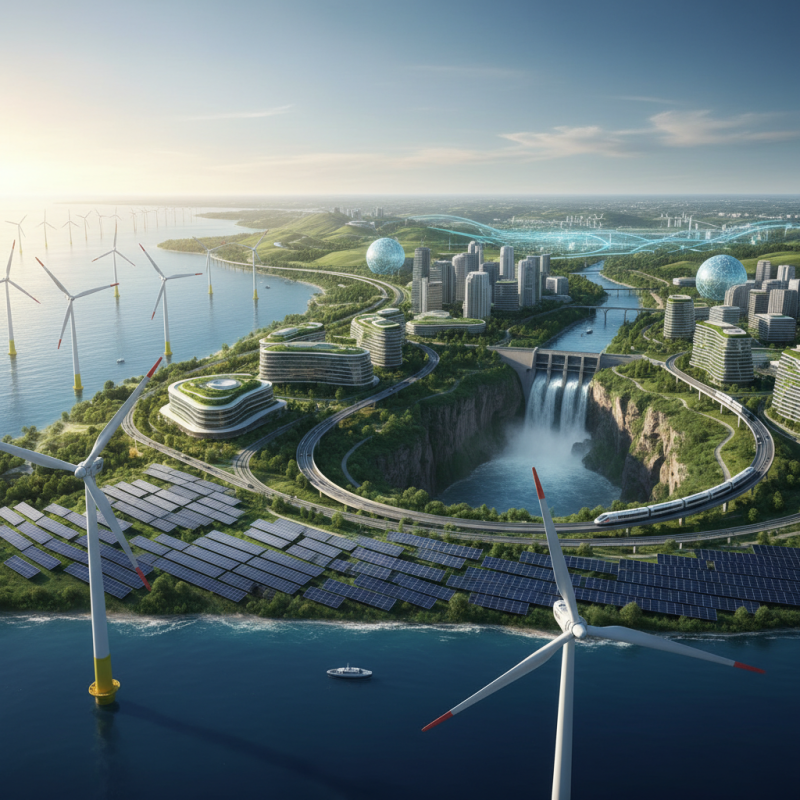
Energy independence plays a crucial role in enhancing national security. By investing in renewable power sources, nations can reduce their dependence on foreign fossil fuels. This shift not only strengthens energy security but also fosters economic stability. Countries can produce energy locally, creating job opportunities and supporting regional economies.
One effective strategy is to diversify the energy mix. A combination of solar, wind, and hydro power can create a robust energy system. This reduces vulnerability to supply disruptions. However, transitioning to renewables can be challenging. Infrastructure investments are necessary, and policy frameworks need to adapt. That's where strong leadership comes into play.
Consider community-based energy projects. They can empower local communities and foster resilience. When people generate their own energy, it increases self-sufficiency. Plus, it reduces transmission losses and environmental impact. Remember, some regions may struggle due to geographical limitations. Not every area can harness wind or solar energy equally. Adaptation and innovation will be key.
Top Benefits of Renewable Power for a Sustainable Future
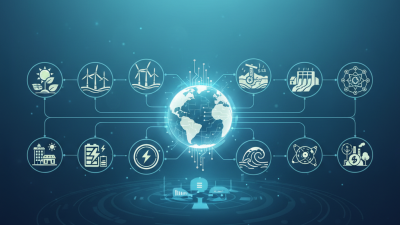
This chart illustrates the key benefits of renewable energy sources including energy independence, job creation, and environmental impact. Renewable power not only reduces greenhouse gas emissions but also enhances national security by decreasing reliance on foreign energy. As we transition towards a sustainable future, these benefits become increasingly vital.
Public Health Benefits: Reducing Air Pollution through Renewable Energy
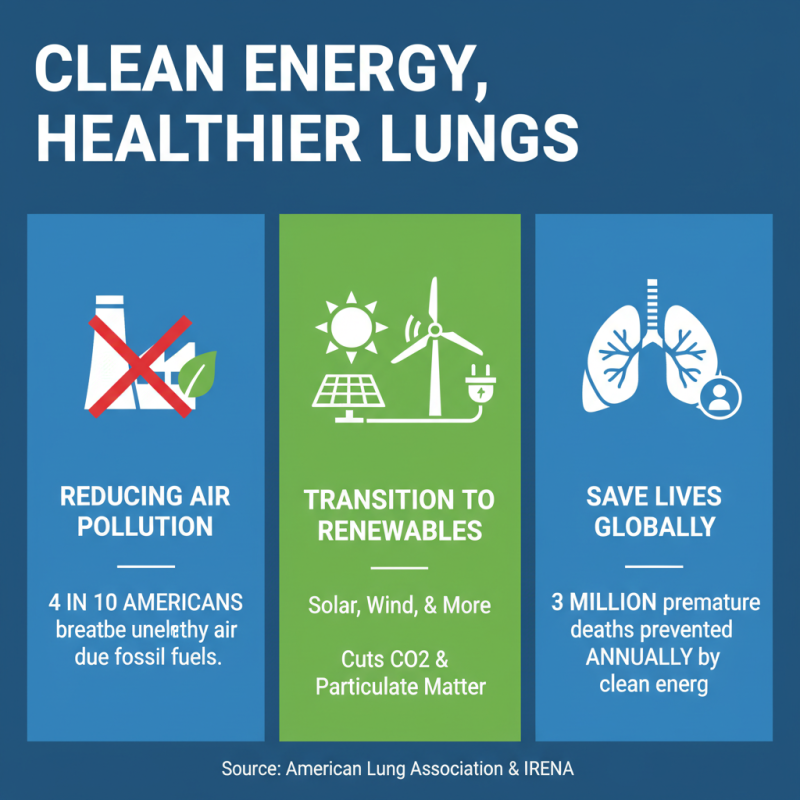
Transitioning to renewable energy sources offers substantial public health benefits, primarily by reducing air pollution. According to the American Lung Association, fossil fuel combustion is responsible for 4 out of 10 people in the U.S. living in areas with unhealthy air quality. By embracing solar, wind, and other renewable technologies, we can significantly lessen harmful emissions like carbon dioxide and particulate matter. A report from the International Renewable Energy Agency highlights that widespread adoption of renewables could prevent approximately 3 million premature deaths annually due to air pollution.
Renewable energy sources not only contribute to cleaner air, but they also foster healthier communities. Improved air quality reduces the incidence of respiratory diseases and cardiovascular problems. In fact, a study published in Environmental Health Perspectives found that transitioning to renewables could save the U.S. healthcare system billions of dollars each year in avoided healthcare costs. These numbers are compelling reasons for policymakers to prioritize sustainable energy solutions.
**Tips:** Consider incorporating green energy solutions into your daily life. Use energy-efficient appliances and support local solar initiatives. Every action counts in the fight for cleaner air. Reflect on your energy consumption habits. Even small adjustments can make a significant impact on public health and the environment.