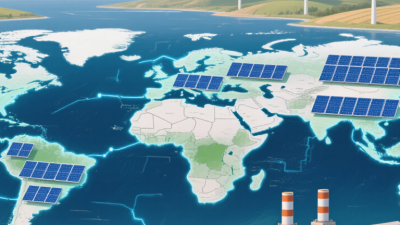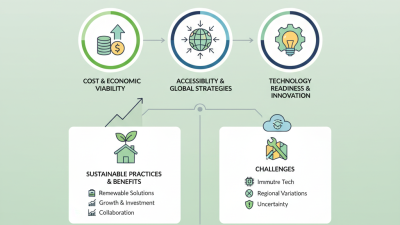
China has become a major source of renewable electricity equipment, project development, and energy services. Global buyers now need more than attractive prices. They need dependable partners, transparent data, and measurable environmental performance.
This introduction presents ten Chinese suppliers serving the sustainable power market. The selection considers manufacturing scale, technology depth, international delivery experience, grid compatibility, and after-sales support. It also reviews evidence such as published sustainability reports, verified certifications, project references, and lifecycle information. Solar modules, wind systems, battery storage, inverters, and integrated energy solutions receive attention.
Details matter. A buyer may compare factory audits, warranty terms, shipment records, and carbon data before signing a long-term agreement. A delayed inverter can stop an entire project. A vague emissions claim can weaken investor confidence. These practical risks deserve as much attention as production capacity.
Fatih Birol, Executive Director of the International Energy Agency, stated: “The clean energy transition is happening worldwide and it’s unstoppable. It’s not a question of ‘if’, it’s only a matter of ‘how soon’.”
That direction is clear. The ranking is not perfect. Supplier performance can change quickly. Regional regulations, raw-material sourcing, and project conditions may also alter the best choice. Buyers should conduct independent due diligence before making commercial decisions.
The strongest suppliers combine engineering discipline with credible sustainability practices. They communicate limitations, not only achievements. That honesty matters.
This guide offers a practical starting point for global procurement teams seeking resilient, scalable, and responsibly delivered sustainable power solutions from China.
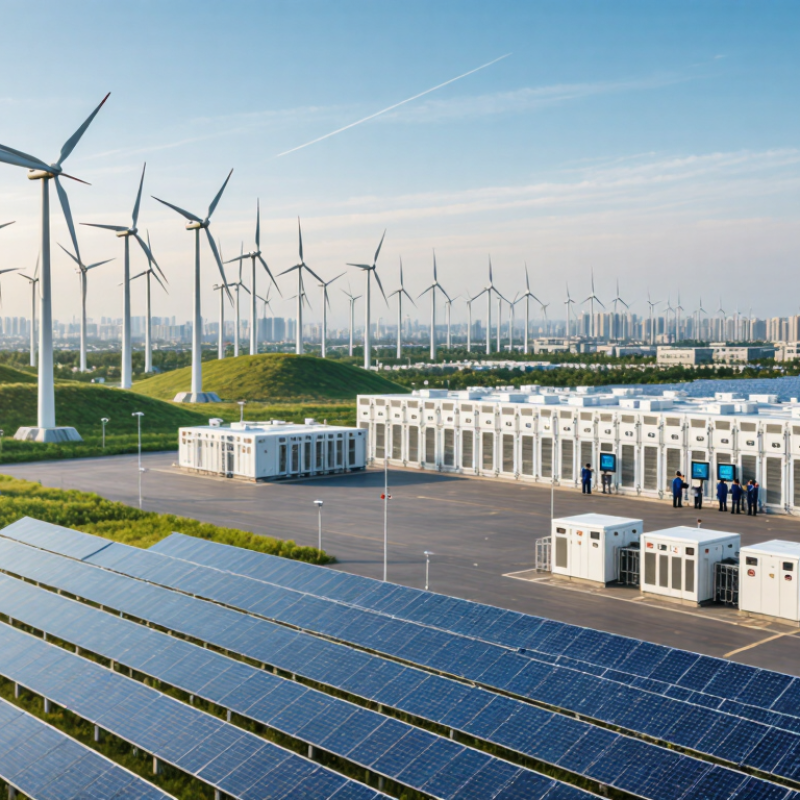
China’s sustainable power suppliers serve buyers seeking electricity, certificates, or projects with lower environmental impact. Their scope includes renewable generators, electricity traders, storage providers, and energy service companies. Solar, wind, hydropower, and biomass are common sources. Some suppliers also provide power purchase agreements, emissions data, and energy-use monitoring.
The market is expanding quickly. China’s National Energy Administration reported that renewable capacity reached about 1.89 billion kilowatts by the end of 2024, representing nearly 57% of total installed power capacity. IRENA’s Renewable Capacity Statistics 2025 recorded approximately 373 gigawatts of renewable additions in China during 2024. These figures show scale, not automatic sustainability. Buyers still need to examine project location, grid connection, certificate quality, and production records. The boundary remains imperfect. A supplier may sell renewable certificates while delivering mixed-grid electricity. That difference deserves careful review.
Tips: Ask for 12 months of generation data, certificate ownership records, and third-party verification. Check whether claims cover electricity, construction, or both. Compare contract terms with local renewable regulations. An independent technical audit is useful, but it cannot replace buyer judgment. Sustainability claims can look clean on paper. The details often tell another story.

Global buyers should evaluate sustainable power suppliers through evidence, not attractive brochures. The International Energy Agency reported nearly 510 gigawatts of renewable capacity additions in 2023. IRENA recorded 473 gigawatts in the same year. The difference reflects reporting methods. It also shows why definitions matter.
A reliable supplier should disclose its generation mix, project locations, commissioning dates, and hourly production data. Buyers should examine whether renewable electricity is newly built or simply matched through certificates. Lifecycle emissions deserve attention too. The IPCC notes that wind and solar generally have far lower lifecycle emissions than fossil generation. Ask for independent verification. Check certificate ownership, retirement records, and contract boundaries. Small details matter.
Financial strength is another practical test. Suppliers need enough capacity to deliver during cloudy, calm, or congested periods. Buyers should review storage plans, grid access, curtailment rules, and backup arrangements. The IEA expects renewable power to become the largest global electricity source by 2025. Growth is impressive, but rapid expansion can weaken transparency. No scorecard is perfect. A supplier may publish excellent data yet lack dependable delivery experience. Site visits, audit interviews, and sample invoices can reveal that gap. A balanced evaluation should score environmental impact, operational reliability, data quality, legal compliance, and long-term resilience.
China’s Top 10 Sustainable Power Suppliers are helping global buyers source cleaner energy equipment and integrated power solutions. Their portfolios commonly include solar modules, wind components, battery storage, inverters, and smart energy systems. Buyers should examine factory capacity, material traceability, product testing, and after-sales service before signing contracts.
Experienced suppliers provide project records, verified energy-performance data, and clear environmental management procedures. Independent audits can confirm production standards, worker safety, emissions reporting, and responsible mineral sourcing. Reliable companies also explain warranty limits, replacement timelines, recycling options, and spare-parts availability. These details matter when equipment operates across deserts, islands, or cold industrial zones.
Performance still varies. Some suppliers publish impressive carbon figures but provide limited third-party evidence. Others offer strong engineering support but weak recycling plans. That gap deserves attention. Buyers should compare lifecycle emissions, grid compatibility, delivery history, and local maintenance capability. Site visits can reveal practical details, such as dust-control measures, warehouse organization, and testing discipline. No supplier is perfect. A careful shortlist should balance price, technical reliability, transparent documentation, and measurable environmental progress.
China’s renewable power capacity expanded from approximately 437 GW in 2014 to 1,516 GW in 2023. These ten year-end snapshots illustrate the scale and pace of sustainable power supply growth, covering hydropower, wind, solar, and biomass capacity.
Source: Compiled from year-end renewable energy capacity statistics published by China’s National Energy Administration and China Electricity Council. Values are rounded to the nearest gigawatt.
China’s leading ten sustainable power suppliers should be compared through evidence, not factory size. Buyers should examine solar modules, inverters, battery systems, wind equipment, and grid controls separately. IRENA’s Renewable Capacity Statistics 2024 recorded 473 gigawatts of renewable capacity additions in 2023. That growth increases demand for stable supply chains and measurable product performance.
Strong suppliers usually provide IEC-tested photovoltaic modules, including IEC 61215 and IEC 61730 compliance. Battery manufacturers should disclose IEC 62619 testing, thermal-management methods, cycle-life data, and transport documentation. ISO 9001 supports quality control, while ISO 14001 indicates structured environmental management. ISO 45001 also shows attention to workplace safety. Certifications alone are not enough. Test scope and certificate validity matter.
Export readiness requires market-specific documentation. European shipments often require CE conformity, technical files, and reliable recycling information. North American buyers may request recognized safety testing and local grid-code compliance. Southeast Asian, Middle Eastern, and Latin American markets often prioritize humidity resistance, high-temperature operation, and spare-parts access. The IEA reported that global renewable capacity expanded by nearly 510 gigawatts in 2023, highlighting intense competition among exporters. However, some suppliers still present optimistic efficiency claims without long-term field evidence. Buyers should request independent test reports, warranty terms, shipment references, and failure-rate data before signing contracts. Small details matter.
Global buyers should test sustainability claims beyond a low tariff. IRENA’s Renewable Capacity Statistics 2024 recorded 473 GW of renewable additions in 2023, representing 86% of total global additions. For Chinese suppliers, that momentum is promising, but scale alone proves little. Ask for energy-attribute certificates, project locations, commissioning dates, and retirement records. Traceability matters. Evidence should connect each delivered megawatt-hour to a verifiable asset. Suppliers should also explain whether projects are new, contracted, or merely unbundled from older generation. That distinction affects additionality and emissions accounting.
Cost is only one filter. Buyers can compare levelized prices, contract duration, curtailment rules, imbalance charges, and currency exposure. The IEA’s Electricity 2024 report projected stronger global power demand through 2026. A cheap contract that fails during peak hours is not resilient. Request hourly matching data, outage history, storage plans, and grid-connection evidence. Do not accept polished dashboards without raw records. On-site audits and independent assurance add credibility, yet audits can miss supplier changes or weak subcontractor controls.
Ask how panels, batteries, and inverters are sourced, recycled, and replaced. CDP’s 2023 Supply Chain Report found that supply-chain emissions average 11.4 times operational emissions for many companies. That figure makes procurement evidence material, not decorative. Perfect data is rare. Document gaps openly, price the risk, and review the supplier annually.
| No. | Buyer Consideration | Suggested Weight | Practical Benchmark | Documents and Data to Request | Why It Matters to Global Buyers |
|---|---|---|---|---|---|
| 1 | Renewable Energy Sourcing | 20% | A clearly stated renewable electricity share, supported by plant-level generation or procurement data for the contracted delivery period. | Generation mix, project list, technology type, commissioning date, monthly or annual output records, and supply-area information. | Helps buyers distinguish dedicated renewable supply from generic low-carbon claims. |
| 2 | Additionality and Project Quality | 15% | Preference for new-build or directly contracted renewable projects, with a transparent explanation of project ownership and funding. | Project development date, ownership structure, power-purchase agreement terms, environmental approvals, and investment records. | Supports stronger environmental claims and reduces the risk of counting existing generation as new impact. |
| 3 | Certificate Traceability | 15% | Each environmental attribute should be uniquely recorded, retired or cancelled for the buyer, and matched to the relevant electricity volume and period. | Certificate type, serial-number range, issuing system, retirement records, cancellation statements, and double-counting controls. | Provides an auditable basis for renewable electricity reporting across international operations. |
| 4 | Emissions Accounting Compatibility | 12% | Consumption and emissions data should be supplied in MWh, tCO₂e, location, time period, and applicable grid-emission-factor formats. | Meter data, calculation methodology, emission factors, market-based and location-based reporting support, and assurance statements. | Improves compatibility with the GHG Protocol, sustainability disclosures, and customer carbon questionnaires. |
| 5 | Contract Flexibility | 10% | Contract terms should define volume tolerance, settlement rules, delivery profile, imbalance responsibility, renewal options, and termination conditions. | Sample power-purchase agreement, pricing formula, minimum-take clauses, force-majeure provisions, and change-in-law terms. | Reduces commercial exposure when production, demand, or local electricity-market rules change. |
| 6 | Geographic Coverage and Delivery Capability | 8% | Ability to serve the buyer’s required provinces, industrial parks, grid regions, and operating sites under applicable local market rules. | Trading qualifications, service-area map, market-access permissions, delivery schedule, and local settlement arrangements. | Important for manufacturers with multiple facilities and for buyers requiring consistent regional coverage. |
| 7 | Price Transparency | 7% | The quotation should separate electricity, transmission or distribution charges, government surcharges, certificate costs, taxes, and service fees. | Itemized quotation, historical settlement examples, index references, adjustment formula, tax treatment, and all pass-through charges. | Allows buyers to compare offers on a consistent total-cost basis rather than headline energy price alone. |
| 8 | Reliability and Risk Management | 6% | A documented plan for forecast errors, renewable intermittency, backup supply, grid interruptions, and settlement deviations. | Reliability record, balancing arrangements, backup-supply terms, credit policy, business-continuity plan, and incident-reporting process. | Protects production continuity and limits operational disruption caused by variable renewable output. |
| 9 | Reporting and Verification Support | 4% | Monthly or quarterly reporting with auditable consumption, renewable volume, certificate status, emissions factors, and variance explanations. | Report template, data dictionary, meter-data protocol, external assurance information, audit rights, and retention period. | Reduces internal reporting effort and improves readiness for customer, investor, and regulatory reviews. |
| 10 | Legal, Environmental, and Social Compliance | 3% | Supplier and project activities should comply with applicable Chinese laws, grid rules, environmental requirements, labor standards, and anti-corruption controls. | Business licenses, trading qualifications, environmental permits, labor-policy statement, sanctions screening, anti-bribery policy, and dispute history. | Supports responsible sourcing and reduces legal, reputational, and supply-chain compliance risks. |