How to Understand Renewable Energy Benefits for Your Business?
Understanding renewable energy benefits is crucial for today’s businesses. Many companies are shifting towards sustainable practices, focusing on how they can leverage renewable energy sources. These sources, such as solar and wind, play a vital role in reducing operational costs. Businesses often overlook the immediate advantages of switching to renewable energy.
When companies start integrating renewable energy, they notice significant changes. For instance, reduced energy bills lead to improved profit margins. Additionally, a commitment to sustainability can enhance a brand's reputation. Customers value companies that embrace green practices. However, there can be challenges in initiating this transition. Some businesses may hesitate due to perceived high initial costs or transitional difficulties.
It is essential to explore the real impact of renewable energy on business operations. Learning about renewable energy and its benefits could unlock new potential. Investing in energy-efficient solutions also leads to long-term gains. Companies should participate in discussions about renewable energy to make informed decisions. This exploration can pave the way towards a sustainable future.

Understanding the Financial Savings from Renewable Energy Investment
Understanding the financial benefits of renewable energy can be a game-changer for businesses. A study from the
International Renewable Energy Agency (IRENA) highlights that going green could save companies
up to 80% on energy costs. These savings are crucial for improving profit margins.
Switching to renewable sources, like solar and wind, often requires upfront investment. However, the
long-term returns are significant. For instance, the U.S. Department of Energy reports that the
levelized cost of electricity from solar fell by 88% over the last decade. This shift means that businesses can access electricity
at lower costs, leading to more predictable expense management.
Moreover, businesses can benefit from
government incentives and tax breaks which enhance overall savings. A report from the
Solar Energy Industries Association (SEIA) indicated that solar tax credits can reduce costs by
up to 30%. Yet, companies must evaluate their specific contexts carefully. Understanding local regulations
and available resources can lead to better decision-making and stronger financial outcomes. Avoiding hasty investments and exploring detailed financial scenarios is essential
for maximizing these benefits.
Evaluating the Impact of Renewable Energy on Operational Efficiency
Transitioning to renewable energy offers substantial boosts in operational efficiency for businesses. A report by the International Renewable Energy Agency (IRENA) finds that companies can achieve up to a 30% reduction in energy costs by utilizing renewable sources. Solar panels and wind turbines can often produce energy prices lower than traditional fossil fuels. This shift not only reduces costs but also enhances energy security.
Beyond direct savings, renewable energy impacts operational efficiency in various ways. A survey from McKinsey shows that 60% of firms adopting renewable technologies reported improved overall efficiency. Companies experience decreased downtime due to reliability. Energy sources like solar and wind typically have lower maintenance needs, translating to fewer disruptions in operations.
Yet, the shift to renewables isn't without challenges. The initial investment can be daunting. Firms often grapple with the payback period for solar installations, averaging 5 to 7 years depending on location. Additionally, integrating these systems into existing infrastructures can require strategic planning. Companies must assess their unique situations to maximize benefits while managing risks.
How to Understand Renewable Energy Benefits for Your Business? - Evaluating the Impact of Renewable Energy on Operational Efficiency
| Aspect |
Impact |
Percentage Improvement |
Cost Savings ($) |
| Energy Costs |
Reduction in energy bills |
20% |
$15,000 |
| Operational Efficiency |
Improved machinery reliability |
15% |
$10,000 |
| Regulatory Compliance |
Meeting sustainability goals |
30% |
$5,000 |
| Employee Satisfaction |
Boost in employee morale |
25% |
N/A |
| Brand Image |
Enhanced reputation in the market |
Varies |
N/A |
Exploring Renewable Energy Incentives and Tax Breaks for Businesses
Adopting renewable energy is transforming how businesses operate. Transitioning to clean energy sources, like solar and wind, leads to financial and environmental benefits. Companies investing in renewables can access various incentives and tax breaks to lower operational costs significantly.
A report by the International Renewable Energy Agency (IRENA) states that over 40% of global energy jobs are in renewables. Many countries offer tax credits, which can cover up to 30% of capital costs for renewable installations. Additionally, states may provide rebates or grants, making it more feasible for businesses to invest in energy-efficient technologies.
Tips: Evaluate your local incentives. Check for tax credits that reduce upfront costs. Partner with energy consultants to navigate complex regulations and maximize financial benefits. Keep in mind that not all incentives are permanent. Staying informed is vital.
While the advantages are clear, not all businesses are equipped to make the switch smoothly. Challenges include initial investment and potential disruptions during installation. It's crucial to analyze these factors carefully. Test transitioning in phases, ensuring your operations remain seamless. Balancing costs with sustainability is an ongoing process.
Assessing the Long-term Environmental Benefits of Sustainable Practices
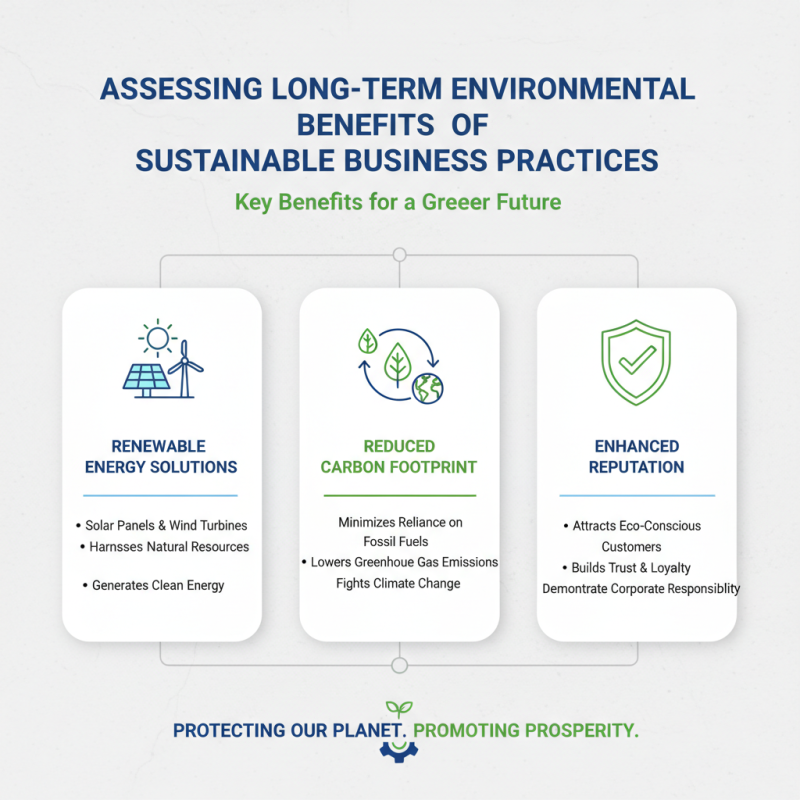
Understanding the long-term environmental benefits of sustainable practices is crucial for businesses. Implementing renewable energy solutions can significantly reduce carbon footprints. For instance, solar panels and wind turbines harness natural resources. They generate clean energy, minimizing reliance on fossil fuels. This shift not only protects the environment but also enhances a company's reputation.
Many businesses feel overwhelmed by initial costs. Investing in green technologies may seem daunting. However, the long-term benefits outweigh these concerns. Reduced energy bills and tax incentives can provide substantial financial relief. Moreover, a commitment to sustainability can attract environmentally-conscious customers. A brand associated with eco-friendliness builds trust and loyalty.
It's important to acknowledge challenges in transitioning to sustainable practices. Change requires adaptability and ongoing education. Businesses may experience setbacks while integrating renewable energy solutions. Continuous assessment and adjustment can lead to successful implementation. Embracing sustainable practices is a journey, not a destination. Each step counts toward a healthier planet.
Examining Case Studies of Successful Renewable Energy Integration in Businesses
Many businesses have embraced renewable energy. This shift brings both benefits and challenges. Case studies reveal real-world impacts. One company reduced energy costs by 30% after installing solar panels. They also enhanced their brand image. This attracted eco-conscious customers.
Another example showed mixed results. A firm invested in wind energy but faced initial hurdles. Permitting issues delayed the project. Yet, once operational, it cut emissions significantly. The company learned from these early struggles. They improved their project management strategies. These insights are crucial for other businesses considering a similar path.
Renewable energy integration isn't just about savings. It's a long-term commitment. Organizations must evaluate their infrastructure and resources. Challenges will arise, but they offer valuable learning experiences. Adopting renewable solutions can foster innovation. These case studies highlight that every step, even imperfect ones, contributes to a greener future.