China’s renewable energy sector is expanding from coastal solar parks to inland wind farms and urban energy systems. This growth has increased demand for engineers, analysts, project managers, and policy specialists. For students, renewable energy courses can provide a direct route into these changing industries.
The strongest programs usually combine theory with practical work. Students may study photovoltaic design, wind resource assessment, energy storage, smart grids, carbon accounting, and environmental policy. A useful course should also offer laboratory access, software training, site visits, or industry projects. These details matter. A polished university webpage cannot replace supervised field experience.
China has many respected universities and technical institutes, but course quality varies by department and degree level. Applicants should examine official syllabi, faculty research records, laboratory facilities, accreditation, tuition, and graduate outcomes. Chinese-language requirements also deserve attention. Some programs appear international but still teach most modules in Mandarin. That can become a serious challenge.
This guide evaluates leading study options through an evidence-based lens. It considers academic depth, practical relevance, teaching resources, and links with renewable energy employers. Public university information and reliable institutional sources should support each comparison. Rankings alone are not enough.
No single course fits every learner. A solar engineer needs different training from a policy researcher. Some information may change quickly, especially fees, admissions rules, and module titles. Readers should verify these details before applying. That small step can prevent an expensive mistake. This guide also recognizes an uncomfortable truth: strong research does not always guarantee strong classroom teaching. Student feedback, project evidence, and careful questions remain essential.
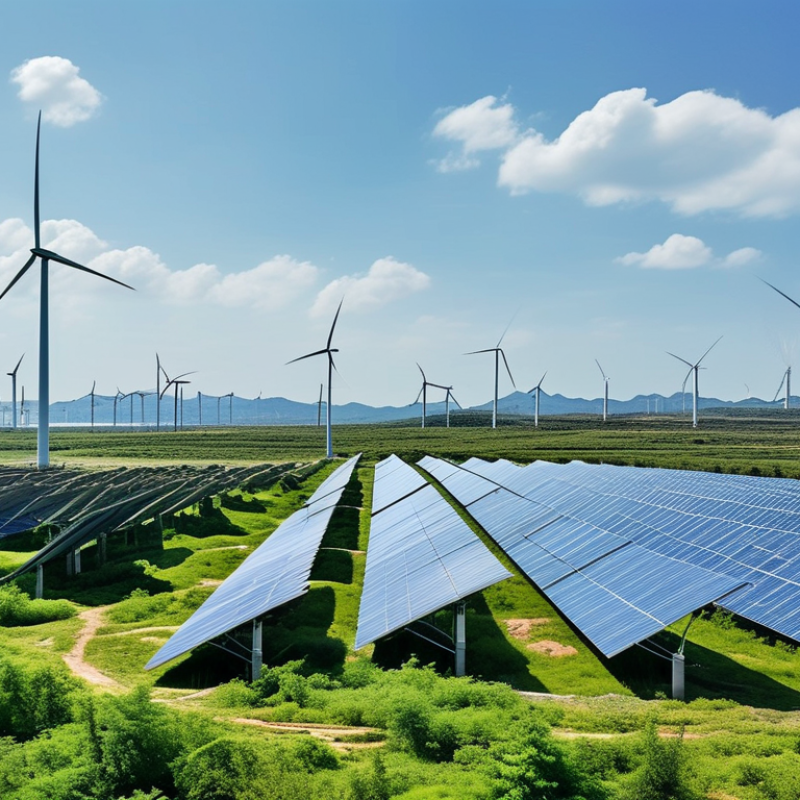
Renewable energy study in China is not one single pathway. Students can choose undergraduate engineering degrees in solar power, wind energy, hydropower, biomass, or energy storage. These programs usually combine mathematics, electrical systems, environmental science, and laboratory work. Learners may test panel output, measure wind speed, or inspect battery temperature. Field practice matters. It makes technical theory less abstract.
Vocational courses offer shorter, practical training for installation and maintenance roles. Students may practice wiring, rooftop array inspection, fault detection, and safety documentation. These courses suit technicians seeking job-ready skills. However, training quality can vary between campuses. Ask about workshop hours, instructor credentials, equipment age, and assessment methods. A certificate alone proves little.
Master’s and professional courses examine grid integration, energy markets, climate policy, and project finance. Some modules focus on hydrogen systems, smart grids, or offshore wind development. Short courses may cover carbon accounting, energy auditing, and renewable project planning. English-taught options exist, but technical terms may still require Chinese reading. Online study is flexible, though it cannot replace supervised fieldwork. I would compare laboratory access, internship arrangements, and graduate outcomes before enrolling. Public information is sometimes incomplete. Verify the details with the department.
| Course Type | Typical Study Level | Main Renewable Energy Focus | Core Subjects | Typical Duration | Common Entry Requirements | Practical Training | Potential Learning Outcomes |
|---|---|---|---|---|---|---|---|
| Renewable Energy Engineering | Undergraduate Degree | Solar, wind, hydropower, biomass and integrated energy systems | Engineering mathematics, thermodynamics, electrical circuits, energy conversion and renewable energy technology | Usually 4 years | Secondary education with mathematics and physics background; language requirements depend on the teaching language | Laboratory experiments, engineering design assignments and field visits | Ability to evaluate renewable technologies, perform basic system calculations and support clean-energy project development |
| Power Systems and Renewable Energy Integration | Master's Degree | Grid-connected solar and wind power, energy storage and smart grids | Power system analysis, power electronics, grid stability, forecasting and energy management | Usually 2–3 years | Bachelor's degree in electrical engineering, energy engineering or a related discipline | Simulation using power-system software, laboratory work and research projects | Skills for analyzing renewable power plants, grid connection, storage coordination and system flexibility |
| Solar Photovoltaic System Design | Professional Certificate | Rooftop, commercial and utility-scale photovoltaic systems | Solar resource assessment, module selection, inverters, system sizing, electrical protection and yield estimation | Several weeks to 6 months | Basic electrical knowledge is recommended; technical work experience may be helpful | PV design exercises, site assessment and system performance calculations | Ability to prepare preliminary PV designs, estimate energy output and identify key installation requirements |
| Wind Energy Technology | Undergraduate or Master's Course | Onshore and offshore wind power | Wind resource assessment, turbine aerodynamics, mechanical systems, control technology and operations | One semester to 3 years, depending on qualification | Physics and mathematics background; advanced programs generally require a relevant bachelor's degree | Wind-data analysis, turbine simulations, maintenance case studies and technical site assessments | Understanding of wind-farm planning, turbine performance, operational risks and maintenance requirements |
| Hydropower Engineering | Undergraduate or Graduate Course | Large hydropower, small hydropower and pumped-storage systems | Hydraulics, fluid mechanics, turbines, dams, hydropower plant operation and environmental management | One semester to 4 years | Relevant preparation in civil engineering, water resources, mechanical engineering or energy studies | Hydraulic laboratory work, plant-operation analysis and engineering design projects | Ability to assess hydropower components, operating principles, efficiency and environmental considerations |
| Energy Storage and Battery Systems | Graduate or Continuing Education | Lithium-ion batteries, flow batteries, thermal storage and hydrogen-related storage | Electrochemistry, battery management systems, degradation, safety, power conversion and storage economics | Several months to 2 years | Background in chemistry, materials science, electrical engineering or mechanical engineering is commonly preferred | Cell testing, battery-pack analysis, charging-cycle experiments and storage-system modeling | Knowledge of storage selection, battery performance, safety controls and renewable-energy balancing |
| Energy Efficiency and Building Energy Management | Professional Certificate | Energy-efficient buildings, solar heating and integrated building systems | Building physics, heating and cooling, energy auditing, passive design and building energy monitoring | Several weeks to 1 year | Open to engineering, architecture, facilities-management and sustainability professionals | Building audits, energy-use calculations, monitoring exercises and retrofit proposals | Ability to identify efficiency measures, estimate energy savings and integrate renewable technologies into buildings |
| Hydrogen and Fuel Cell Technology | Master's or Specialized Course | Green hydrogen production, storage, transport and fuel-cell applications | Electrolysis, fuel-cell chemistry, hydrogen safety, compression, materials and system integration | One semester to 2 years | Undergraduate study in chemical engineering, materials science, energy engineering or a related field | Electrolyzer and fuel-cell experiments, process modeling and safety assessments | Understanding of hydrogen value chains, fuel-cell operation, production efficiency and safety management |
| Renewable Energy Economics and Policy | Master's or Executive Course | Energy markets, climate policy, project finance and the low-carbon transition | Energy economics, carbon markets, policy evaluation, investment analysis and sustainable development | Several months to 2 years | Bachelor's degree or relevant professional experience; economics or energy knowledge is useful | Policy analysis, financial modeling, case studies and renewable-project evaluation | Ability to assess policy impacts, project feasibility, investment risks and renewable-energy market trends |
| Renewable Energy Project Management | Continuing Education | Development and delivery of solar, wind and energy-storage projects | Feasibility studies, permitting, procurement, construction management, contracts and risk control | Several weeks to 1 year | Suitable for engineering, construction, finance, environmental or project-management professionals | Project-planning workshops, schedule development, cost estimation and risk registers | Ability to coordinate stakeholders, manage project milestones and evaluate technical, financial and regulatory risks |
Course duration and admission requirements vary by institution, qualification level and teaching language. Prospective students should verify the latest curriculum, accreditation status, laboratory access and internship arrangements before applying.