What Are Renewable Energy Projects and How Do They Work?
Renewable energy projects turn sunlight, wind, water, and organic materials into usable power. They may look simple from a distance. A solar farm, however, depends on land surveys, panel angles, grid connections, financing, and long-term maintenance. A wind project requires wind measurements, turbine engineering, wildlife assessments, and careful community consultation. Every component matters.
Fatih Birol, Executive Director of the International Energy Agency, has said, “The world is entering a new industrial age of clean energy technology.” His observation reflects the growing scale of renewable energy projects worldwide. Yet scale does not guarantee success. A delayed transmission line can leave completed turbines idle. Dust can reduce solar output. Poor forecasting can create unexpected costs. These practical problems deserve attention.
This guide explains how renewable energy projects move from early planning to daily operation. It examines resource assessments, technology choices, construction, electricity storage, grid integration, and environmental responsibilities. It also considers the people behind each project, including engineers, local authorities, landowners, operators, and nearby communities. Their experience often reveals details that technical diagrams miss.
The process is not perfectly smooth.
Some projects underperform. Others improve through monitoring and redesign. Reliable results require transparent data, qualified professionals, realistic budgets, and responsible decision-making. Readers will gain a clearer view of what these projects do, how they work, and why successful clean-energy development requires more than installing equipment.
Renewable Capacity: 4,448 GW Worldwide at the End of 2024 (IRENA)
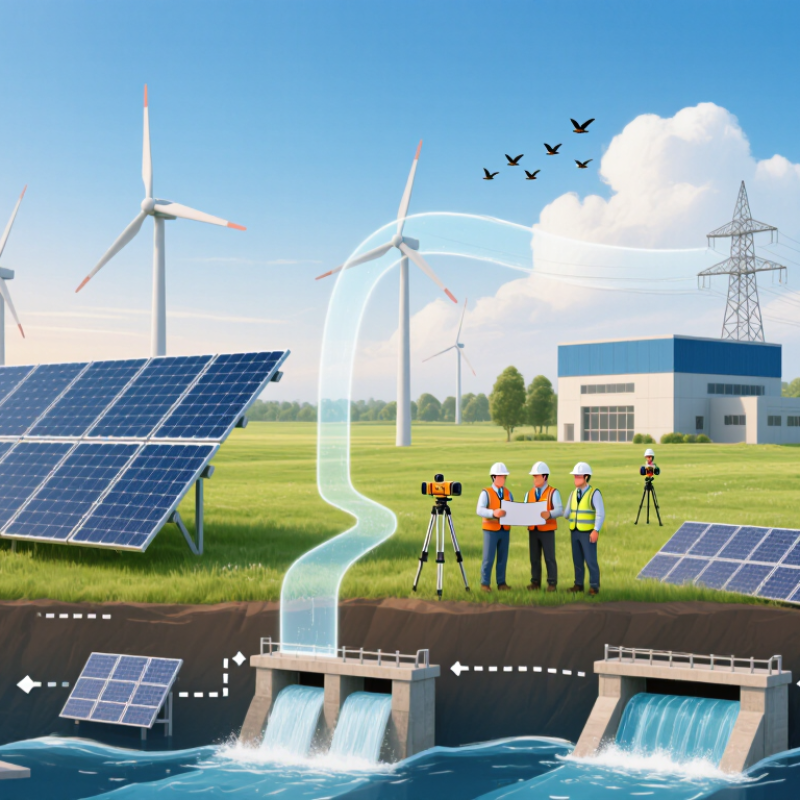
Renewable energy projects generate electricity from sources that naturally replenish, including sunlight, wind, flowing water, heat, and organic materials. At the end of 2024, global renewable capacity reached 4,448 GW, according to the International Renewable Energy Agency (IRENA). This figure shows the world’s installed ability to produce power, not the electricity generated every hour. Solar panels convert light into direct current, while inverters change it into usable alternating current. Wind turbines use moving air to spin generators. Hydropower systems channel water through turbines.
A project usually begins with resource studies, land assessment, grid planning, permits, construction, and long-term maintenance. Batteries may store excess solar power during bright afternoons for evening use. Grid operators then balance changing supply with household and industrial demand. The scale is encouraging, but capacity figures can look cleaner than reality. A wind farm may produce less during calm weather. A solar plant still needs careful planning for cloudy periods, transmission limits, and equipment replacement. My practical concern is simple: adding capacity is not enough if electricity cannot reach users reliably.
Tips: Check a project’s capacity factor, grid connection, storage plan, and local environmental assessment. Ask who will maintain the equipment after installation. Small details matter. Compare annual generation with peak capacity, because the two measurements describe different performance. Independent data and transparent operating records also make claims easier to test.
Resource Assessment and Site Selection for Solar, Wind, Hydro, and Geothermal
What Are Renewable Energy Projects and How Do They Work?
Renewable energy projects convert natural flows into electricity or useful heat. Their success begins with resource assessment, not equipment selection. Engineers combine satellite data, field surveys, weather records, and local experience. They measure sunlight, wind speed, river discharge, or underground heat. Short studies can mislead. Seasonal patterns matter greatly.
Solar developers study irradiation, cloud cover, shading, slope, and dust. A suitable site should also have nearby grid capacity and stable ground. Wind teams install measurement masts or remote sensors for several months, often longer. They examine turbulence, extreme gusts, terrain, and turbine spacing. For hydropower, engineers analyze flow duration curves, flood risks, sediment, fish habitats, and elevation changes. Geothermal projects require temperature surveys, geological mapping, well testing, and careful pressure analysis. A hot surface does not always indicate a productive reservoir.
Site selection is a balancing exercise. Land access, construction roads, water availability, transmission distance, and community concerns can change the design. Independent specialists should check assumptions and uncertainty. Regulations and environmental studies also influence the final layout. Some early estimates remain imperfect, especially where data is limited. That weakness should be recorded, not hidden. Field teams may revise energy forecasts after a wet year, a calm season, or an unsuccessful test well. Good decisions leave room for correction.
Grid Integration: Managing Variable Output with Storage and Flexible Demand
What Are Renewable Energy Projects and How Do They Work?
Grid Integration: Managing Variable Output with Storage and Flexible Demand
Renewable energy projects convert sunlight, wind, water, or organic matter into electricity. Solar panels produce most power around midday, while wind turbines may peak overnight. This timing rarely matches household and industrial demand. The grid must constantly balance both sides.
The International Renewable Energy Agency reported 473 gigawatts of renewable capacity additions in 2023, representing 86% of global new power capacity. More variable generation requires better coordination. Battery systems can store surplus solar at noon and discharge it during the evening peak. A control room may also reduce industrial pumping for several minutes, then restore it later. Small actions matter.
Storage is not the only answer. Flexible demand, stronger transmission, accurate forecasting, and regional power exchanges can absorb changing output. The International Energy Agency states that global battery storage deployment must expand sixfold by 2030 in its net-zero pathway. That target is technically demanding. A battery cannot cover every windless week, and long-duration storage remains expensive in many markets. Forecasts can also miss sudden cloud cover or extreme weather.
Operators therefore combine several tools. They use five-minute forecasts, automatic frequency controls, and reserve capacity. Smart meters can shift water heating or vehicle charging without disrupting users. The design is practical, but not perfect. Local grid limits still decide how much renewable electricity can connect.